

Liquid Crystal Display (LCD) is a display device that uses liquid crystal control transmittance technology to achieve color display. It has the advantages of small size, light weight, power saving, low radiation, and easy portability, and is widely used in TV sets, monitors, laptops, tablets, smartphones and other fields.Now many companies excel in TV field.

LCD originated in the 1960s. In 1972, S.Kobayashi in Japan first made a defect – free LCD screen, and then Sharp and Epson in Japan industrialized it. In the late 1980s, Japan mastered the production technologies of STN – LCD and TFT – LCD, and liquid – crystal TVs began to develop rapidly. Later, South Korea and Taiwan, China also stepped into this industry. Around 2005, the Chinese mainland followed up. In 2021, the production volume of Chinese LCD screens exceeded 60% of the global shipment volume, making China the first in the world.
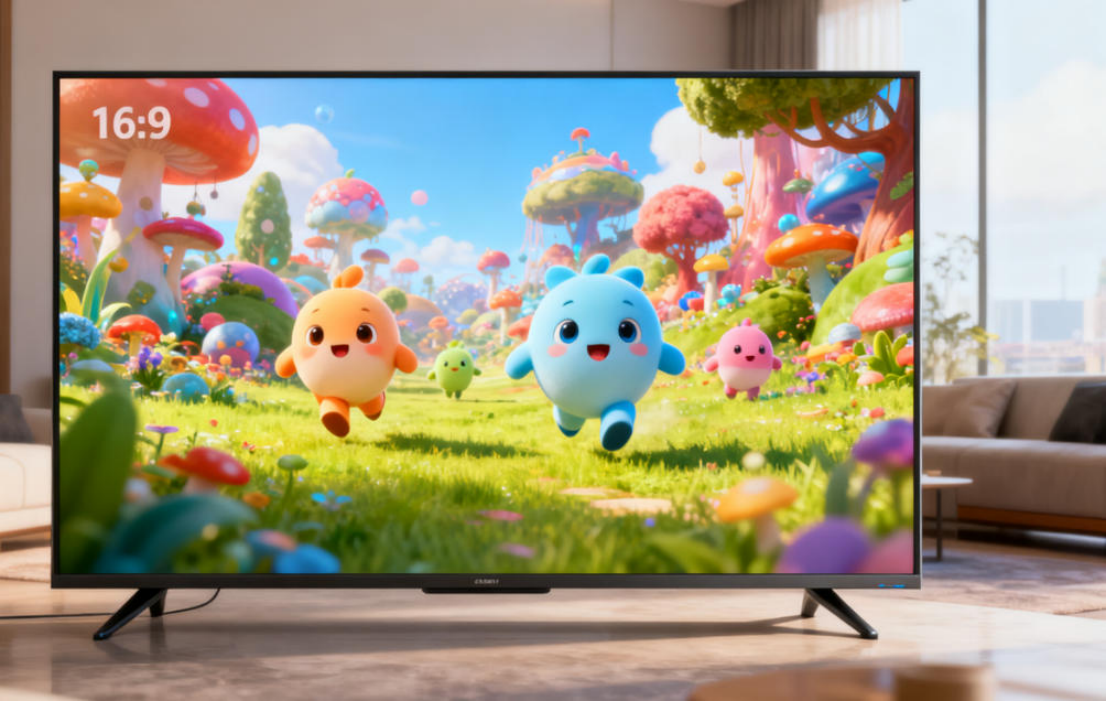
LCDs display images by taking advantage of the characteristics of liquid crystals. They use a liquid crystal solution between two polarizing materials. When an electric current passes through the liquid, the crystals are rearranged to achieve imaging. According to usage and display content, LCDs can be divided into segment – type, dot – matrix character – type and dot – matrix graphic – type. According to physical structure, they are divided into TN, STN, DSTN and TFT. Among them, TFT – LCD is the mainstream display device.
Post time: Sep-22-2025


