

A 32-inch set arrives with a blank screen, and the customer wants it back tomorrow. Three more sets with the same complaint are already waiting on the bench. In most small repair shops the slowest part of this job is not the soldering. It is deciding which board failed, then waiting for a replacement that fits the panel in front of you. Shops that keep a few compatible LED TV mainboards on the shelf describe the same day differently: ten minutes to locate the fault, under an hour to swap, a finished set before closing.
That gap is not about working faster. It is about removing steps that never had to be there.
Triage first: power, backlight, then the board
Confirm where the fault sits before ordering anything. A set with no standby light and a blown fuse usually has a power problem, not a signal problem. A set that starts, produces sound and shows a faint image under a torch has a backlight problem. A set that boots, shows the logo and then refuses HDMI input, drops its menu or restarts on its own is pointing at the main board. Measure the standby rail, the 12V rail under load and the backlight enable line. Ten minutes with a meter prevents an order you will regret.
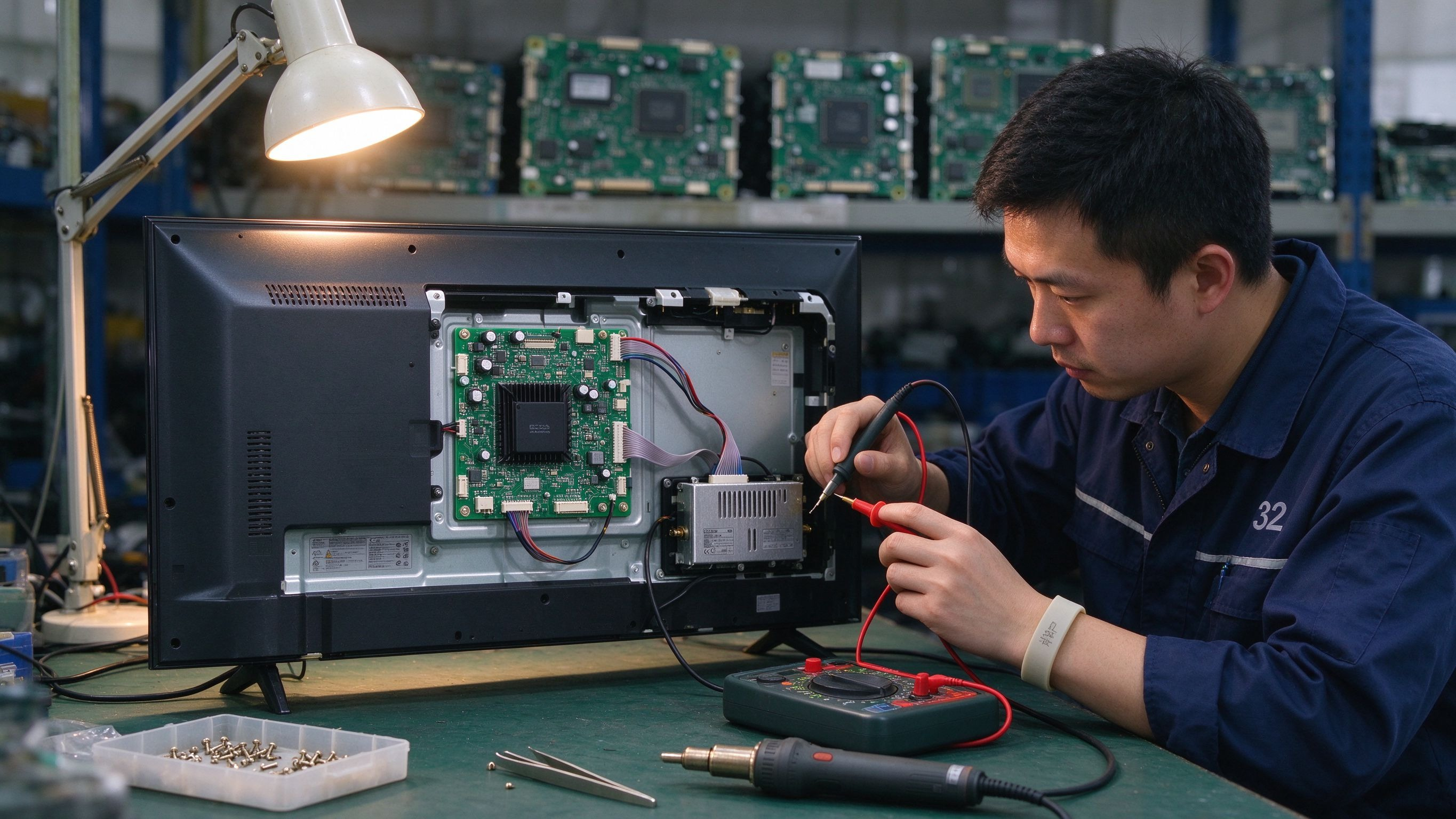
图1 First check on the bench: measure the rails before deciding which board to change. Image is an illustrative render.
Match interface, resolution and firmware before you buy
A universal LED TV motherboard only saves time when it fits the panel. Three checks decide that. The LVDS connector: 30-pin single, 50-pin dual or V-by-One, plus the pinout on the cable. The resolution: 1366×768 and 1920×1080 panels need different firmware, and a 1080p board pushed onto a 768p panel gives a squeezed picture or none at all. The panel drive voltage: 3.3V, 5V or 12V, which has to be selected, not guessed. Boards with an on-screen parameter menu let a technician set screen size, resolution and mirror mode from the remote, so no programmer is needed at the bench. A 3-in-1 TV motherboard goes a step further: power supply, signal processing and backlight driver sit on one PCB, so a set with two failed sections needs one part instead of two.
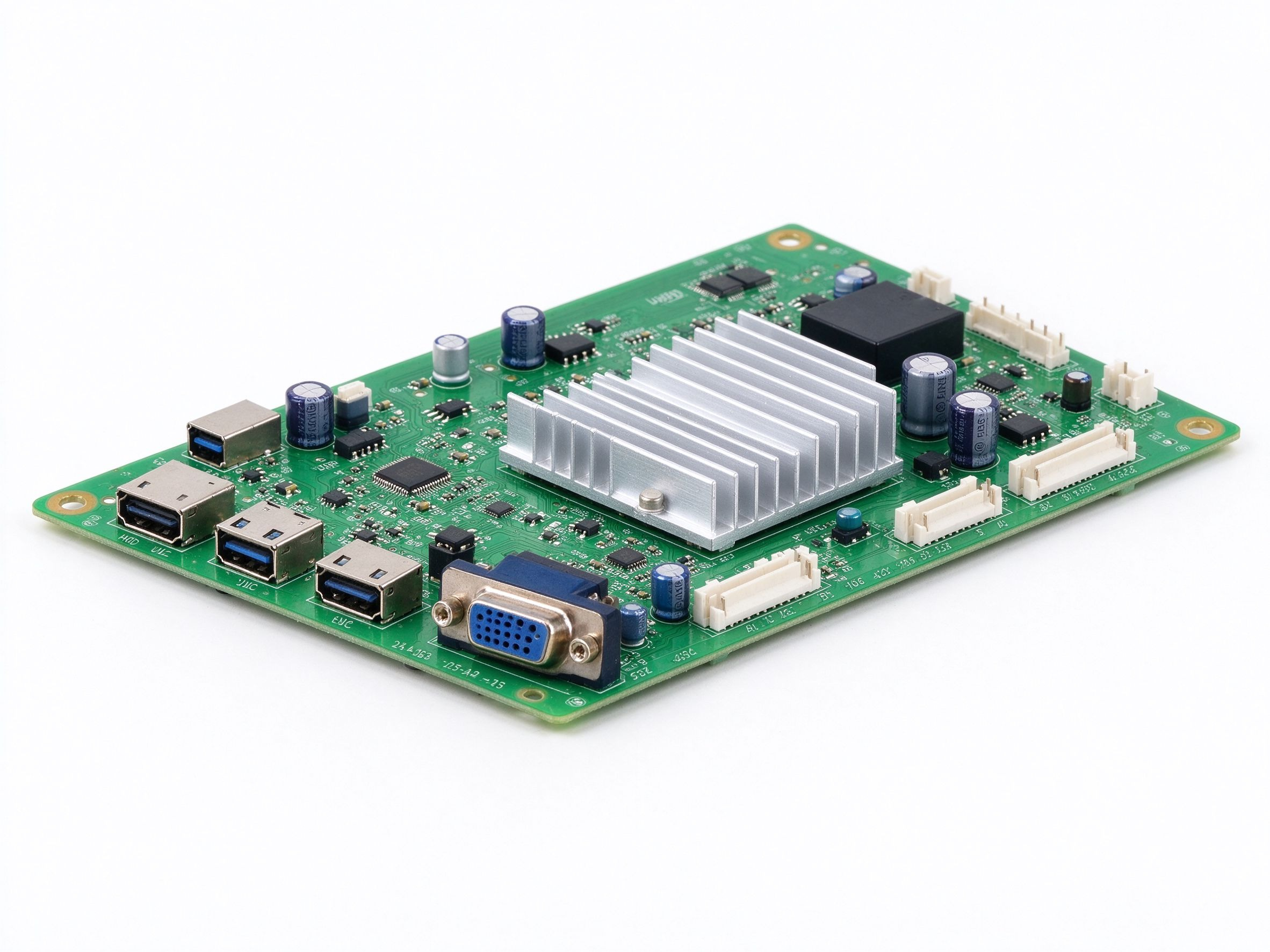
图2 Universal board with HDMI, USB and VGA ports, plus a parameter menu for panel settings. Image is an illustrative render.
A repeatable 45-minute swap
Speed comes from repetition, not from rushing. The shops that finish inside an hour follow the same order every time, and write down what they did.
1. Photograph the wiring and connector positions before touching anything.
2. Disconnect mains, let the rails discharge, then remove the LVDS cable last rather than first.
3. Move the standoffs and heat spreader to the new board; tighten screws evenly, finger-tight plus a quarter turn.
4. Fit the board, connect power and speakers, then the LVDS cable, and check that the plug sits square in the socket.
5. First power-up through a series lamp; if the lamp glows bright, stop and look for a short.
6. Set panel parameters, run colour bars and grey scale, then label the set with board model and firmware version.
Most of the time saved here is rework avoided: a reversed LVDS plug or a mis-set panel voltage will send you back to the start, and the customer hears about it.
表1 Fault symptom, first suspect and typical bench time
| Symptom on the bench | First suspect | Typical bench time |
| No standby light, fuse open | Power module | 20-30 min |
| Boots, no image, torch test shows picture | Backlight strips | 60-90 min |
| Boots, logo appears, HDMI or menu dead | Main board | 30-45 min |
| Wrong resolution or split picture after swap | Panel parameter setting | 10-15 min |
Stock three boards, not thirty
No shop can carry every OEM part, and trying to is how capital disappears into shelves. A workable stock fits one shelf: a 15-24 inch board, a 32-43 inch board, a 50-55 inch board, two backlight strips covering the common 32 and 43 inch panels, and a universal power module for sets whose supply section failed on its own. Assemblers get the same benefit from an LED TV SKD kit, where board, power module, strips and remote arrive matched, so the packing line never has to argue about compatibility.
图3 Backlight strips are the second most common failure after the power section. Image is an illustrative render.
What still costs time
Three cases stay slow, and pretending otherwise wastes money. A cracked or delaminated panel cannot be saved by any board. A T-CON bonded to the panel means the whole panel assembly is the part. A board whose firmware cannot drive an unusual panel resolution will fight you until you find one that can. A compatible board shortens the repair; it does not repair a broken panel. Quote those jobs honestly and the fast ones stay fast.
Why the source matters
Compatibility is easy to claim and hard to check. What can be checked is the record behind the part. Sichuan Junhengtai Electronic and Electric Appliance Co., Ltd. has produced LCD TV and home appliance accessories in Chengdu since 2005, exports to more than 30 countries, reports roughly USD 60 million in annual export sales and serves over 500 customers. Production follows ISO 9001 quality management, the boards carry CE and FCC certification, and the company holds utility model patents on TV main boards, network set-top boxes and tuners. Buyers who need a specific configuration can use its OEM/ODM service and one-stop SKD supply.
Repair time is lost in ordering, not in repairing. A shop that knows which board failed, keeps the right three on the shelf and follows the same swap every time returns most sets the same day, and that is the number customers remember.
Post time: Nov-16-2026


